Sugar, Glycation & Skin Aging: What the Science Actually Says
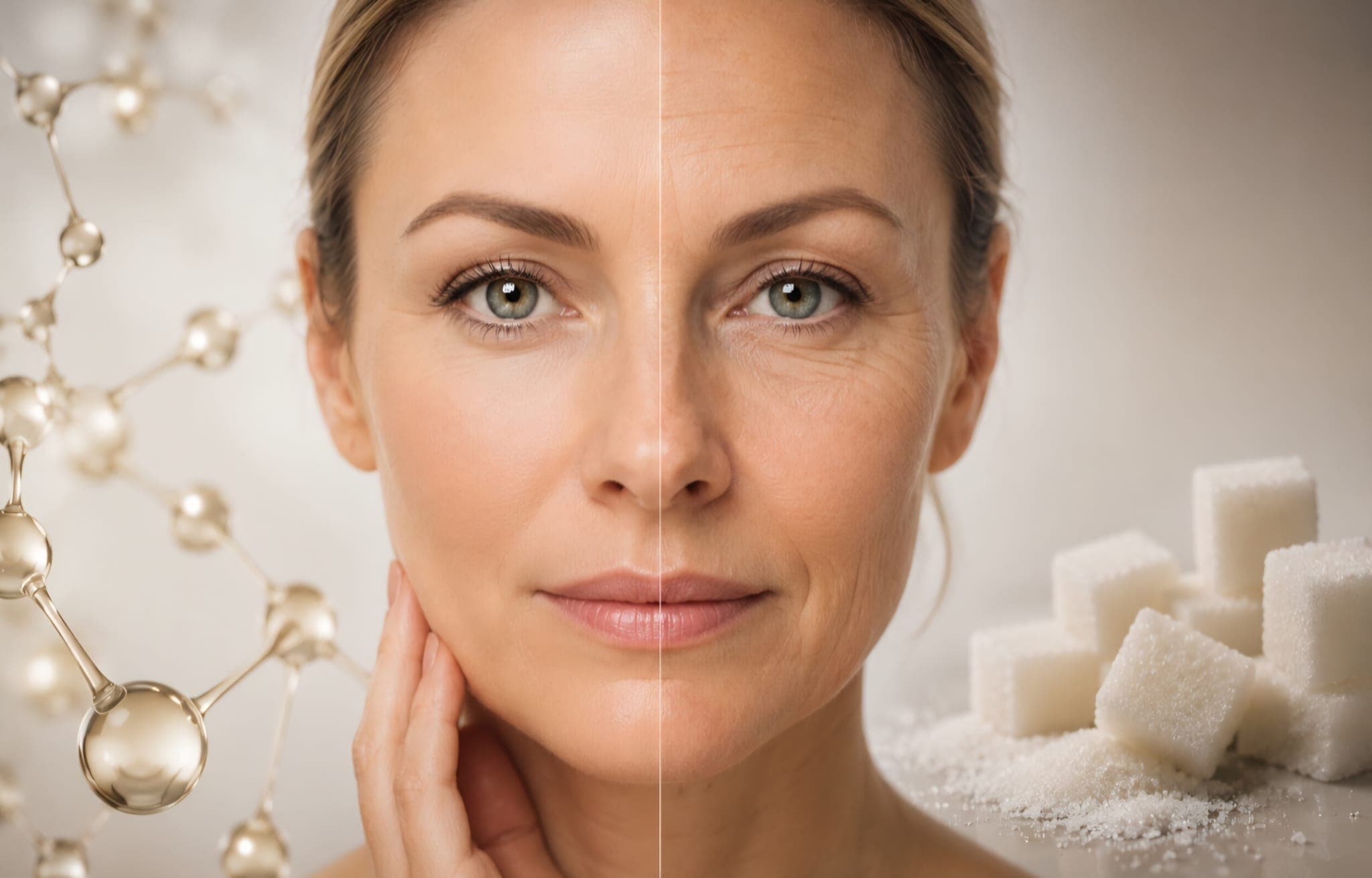
Refined sugar doesn't just affect your waistline. It attacks collagen directly — stiffening the very proteins that keep skin firm, elastic, and youthful.
🧬 Research at a Glance
Glycation is a chemical reaction that happens when excess sugar molecules in the bloodstream attach to proteins — including the collagen and elastin fibers that give skin its firmness and elasticity. The resulting compounds, called advanced glycation end products (AGEs), are irreversible. They stiffen collagen, fuel inflammation, and accelerate visible aging at the cellular level.
A 2024 study published in the Journal of Cosmetic Dermatology confirmed that a high-sugar diet directly damages the extracellular matrix of skin, altering collagen structure via the AGE pathway. The damage appears not just cosmetically but systemically — AGE accumulation is now linked to cardiovascular disease, type 2 diabetes, and neurodegeneration.
“Glycation is not reversible. The AGE compounds formed by excess sugar attach permanently to collagen — stiffening, yellowing, and aging it at the molecular level.”
The good news is that dietary glycation load is highly modifiable. Reducing refined sugar — white table sugar, high-fructose corn syrup, and rapidly absorbed carbohydrates like white flour — lowers circulating blood glucose and dramatically reduces AGE formation. Cooking method also matters: boiling and steaming produce fewer AGEs than grilling and frying.
This is one of the founding principles of VITA: zero white sugar, zero white flour, in every recipe. Not as a trend, but as a science-backed commitment to reducing the dietary inputs that age us fastest.
Put It Into Practice
Sweet Without Sugar
100 desserts that satisfy without the white sugar crash.
Get the Recipe Book — $19.9More on Nutrition Science
Collagen Supplements: What the Research Actually Shows
7 min read
The Gut Microbiome & Healthy Aging: A Research Review
9 min read
Vitamin D & Muscle Function After 50: The Clinical Evidence
7 min read