Why Protein Matters More After 40
Muscle mass naturally declines with age — but the right protein strategy can slow, and even reverse, the trend. Here's the science, simplified.
🔬 Research at a Glance
Based on: Frontiers in Nutrition · 2025
Starting in our mid-30s, we begin losing roughly 3–8% of muscle mass per decade — a process scientists call sarcopenia. By our 60s, this can mean the difference between independence and fragility. The good news: this isn't an inevitable fate. It's a biological response to inputs we can change.
A 2025 study published in Frontiers in Nutrition followed 126 elderly women over 12 weeks. Those consuming 1.2 g of protein per kilogram of body weight daily — compared to the standard 0.8 g/kg — showed significant improvements in lean muscle mass composition. The conclusion was clear: higher protein intake is a non-negotiable strategy for muscle preservation in aging women.
“Higher protein intake is a non-negotiable strategy for muscle preservation in aging women.”
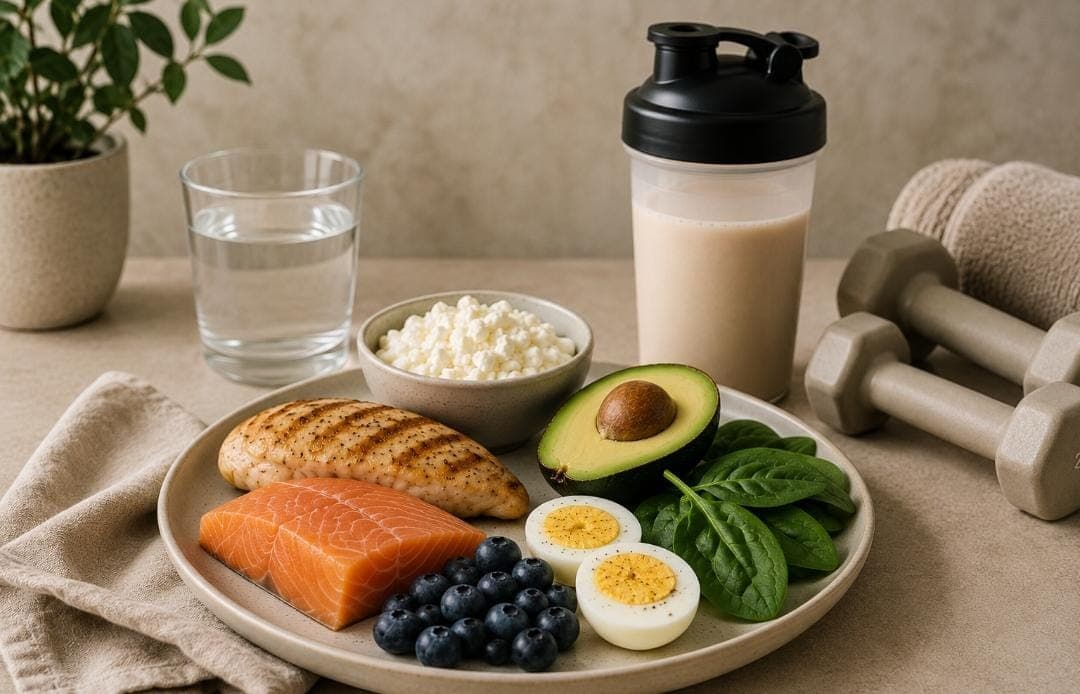
The challenge isn't knowing protein matters. It's making high-protein eating feel sustainable, satisfying, and free of the ultra-processed shakes and bars that dominate the category. Every VITA recipe is engineered to hit 15–30 g of protein per serving using real food: Greek yogurt, eggs, almond flour, collagen — ingredients that nourish your body without the inflammatory load of refined sugar and white flour.
Current research from Oxford Academic recommends 1.0–1.5 g of protein per kilogram of body weight daily for adults over 50, with at least 50% from high-quality sources. That's roughly 70–105 g per day for a 70 kg woman. VITA recipes make hitting those numbers feel like a pleasure, not a chore.
Put It Into Practice
Sweet Without Sugar
100 desserts that satisfy without the white sugar crash.
Get the Recipe Book — $19.9